
DIY Candle Making Tutorial for Natural Beeswax Lovers
Why a Beeswax Candle Making Tutorial Is Worth Your Time
This beeswax candle making tutorial covers everything you need to get started at home — from melting wax safely to pouring, cooling, and burning your first candle.
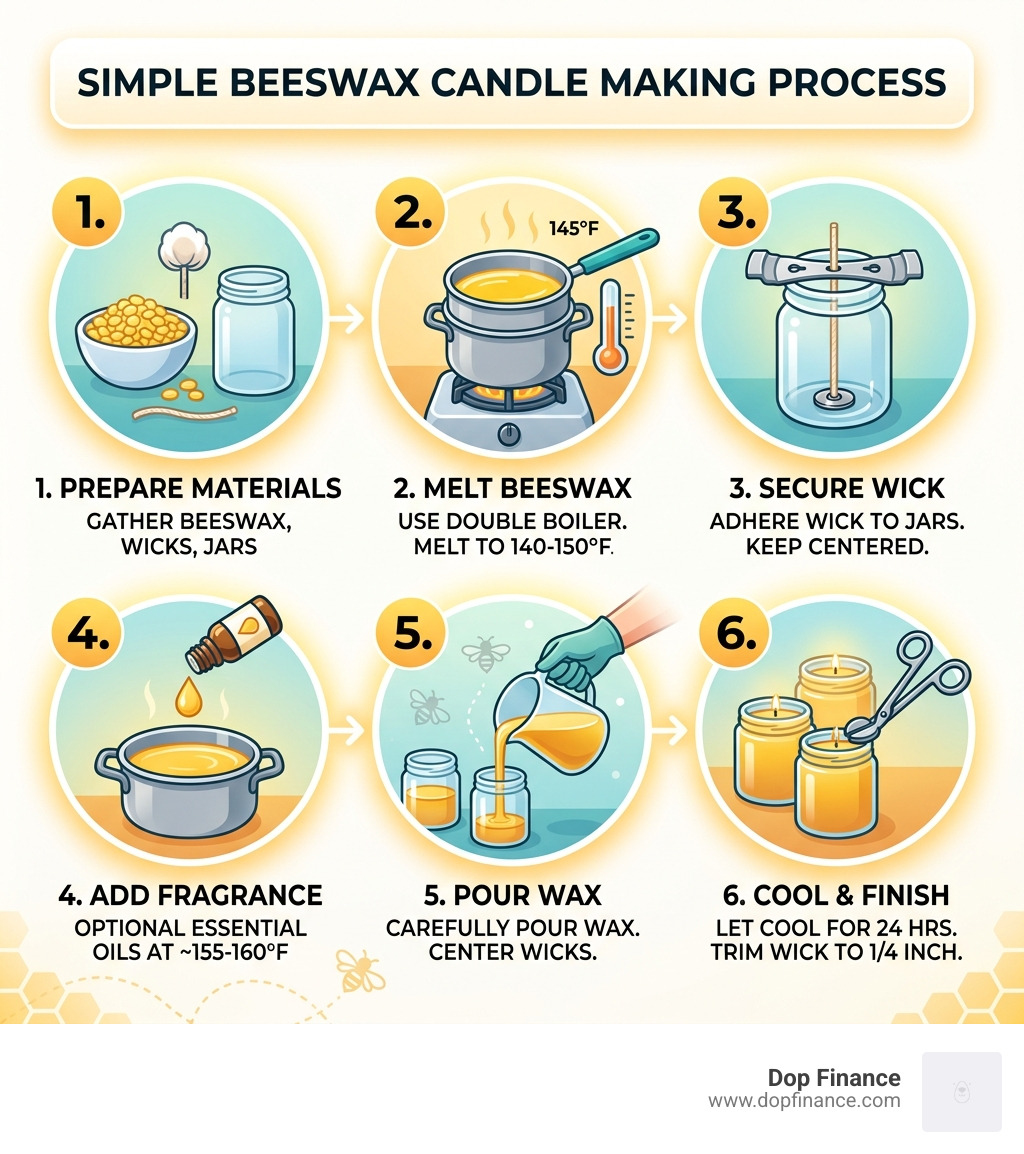
Quick-start steps:
- Gather supplies: beeswax pellets, cotton wicks, glass jars, and a double boiler
- Melt beeswax to 140-150°F using indirect heat
- Secure your wick to the bottom of your jar
- Cool wax slightly to 155-160°F, then add any essential oils
- Pour into jars, center the wick, and let cool for 24 hours
- Trim wick to 1/4 inch before your first burn
There is something genuinely satisfying about making your own candles. You control what goes into them, how they smell, and how long they last.
Beeswax candles are a particularly smart choice. They burn 1.5 times longer than paraffin or soy candles, give off a natural honey scent without any added fragrance, and produce very little soot. One pound of beeswax can yield two 12-ounce candles or up to six smaller 4-ounce ones — making it a practical and affordable DIY project.
Whether you want to create cozy ambiance at home, make thoughtful handmade gifts, or simply avoid synthetic candle ingredients, this guide walks you through every step.
The Benefits of Burning Beeswax in 2026
As we navigate through April 2026, the shift toward sustainable, non-toxic living has never been stronger. At Dop Finance, we look at home fragrance as an investment in your well-being. If you are still burning paraffin candles, you are essentially burning petroleum by-products in your living room.
Beeswax is the gold standard for a reason. It is the least processed candle wax available, harvested as a byproduct of the honey industry. Since bees are a primary pollinator to one third of the food crops in the United States, supporting sustainable beekeeping through wax purchases is a win for the planet and your pantry.
One of the most fascinating aspects of beeswax is its ability to produce negative ions when burned. Most indoor pollutants—like dust, pollen, and dander—carry a positive charge. The negative ions released by a beeswax flame attach to these particles, causing them to fall to the ground. This natural air purification makes beeswax candles a favorite for those with allergies or asthma.
Comparing the Waxes: Why Beeswax Wins
| Feature | Beeswax | Soy Wax | Paraffin Wax |
|---|---|---|---|
| Burn Time | Longest (1.5x others) | Medium | Short |
| Air Quality | Purifies (Negative Ions) | Neutral | Releases Toxins |
| Scent | Natural Honey | Neutral | Chemical/Synthetic |
| Sustainability | High (Renewable) | High (But often GMO) | Low (Petroleum) |
| Melting Point | 140-150°F | 120-125°F | 115-145°F |
Beyond the health perks, beeswax is incredibly efficient. A single candle can burn for over 40 hours, emitting a warm, sunlight-mimicking glow that soy just can’t match. According to experts in DIY Beeswax Candles: A Complete Guide for Beginners – Ames Farm Single Source Honey, the high melting point of beeswax means it stays solid longer and provides a more consistent, hypoallergenic light source.
Essential Supplies for Your Beeswax Candle Making Tutorial
Before we get our hands waxy, we need to gather our tools. Think of this as setting up your “fragrance laboratory.” Because beeswax is notoriously difficult to clean once it hardens, we recommend dedicating specific tools to this hobby.
The Wax
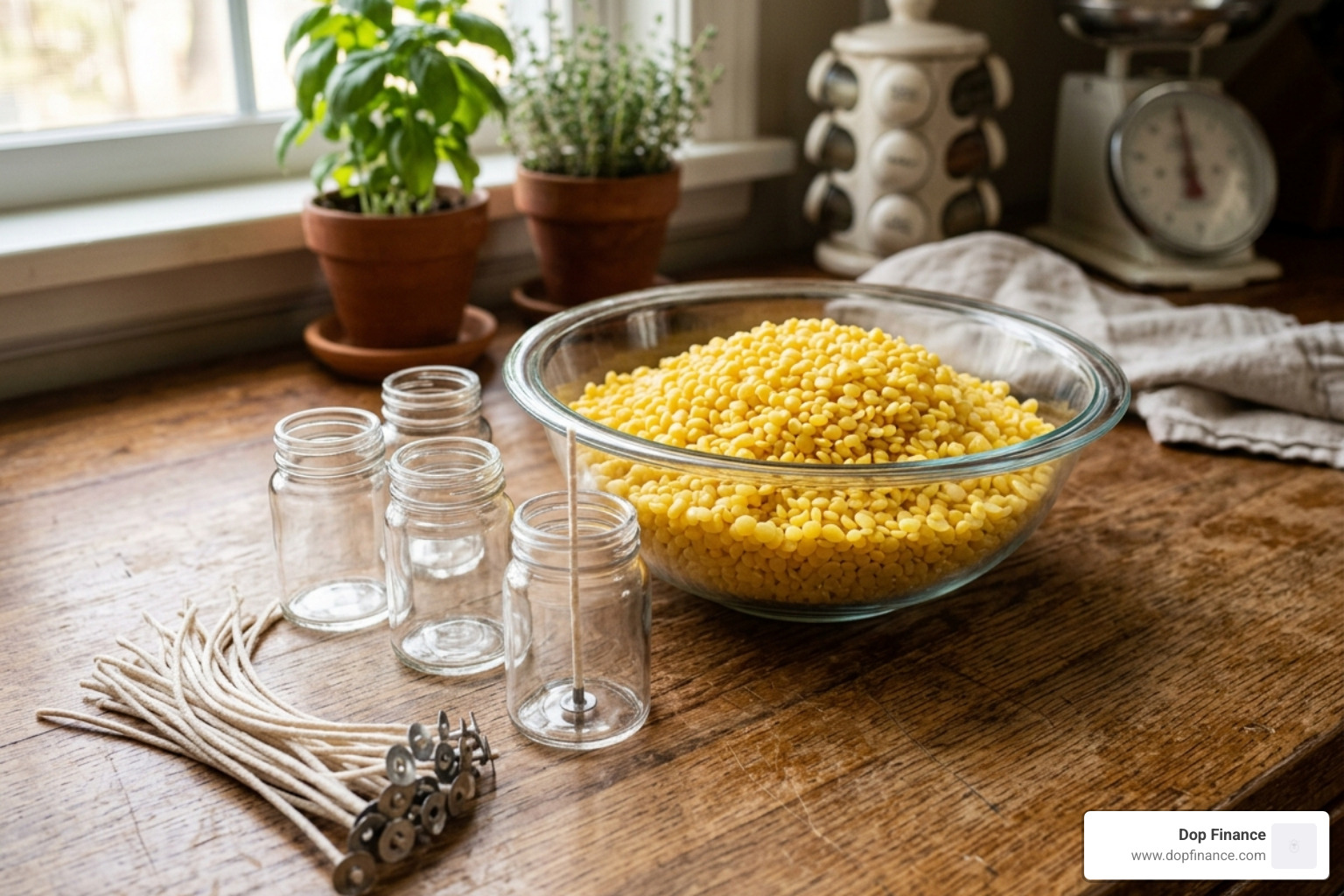
You can buy beeswax in blocks or pellets (pastilles). We strongly suggest beeswax pellets for beginners. They melt faster, are easier to measure, and don’t require you to take a hatchet to a giant block of wax on your kitchen counter. You can choose between yellow (natural) or white (filtered) beeswax. Yellow retains that classic honey aroma, while white is better if you plan on adding delicate dyes.
The Wicks
Beeswax is a “heavy” wax, meaning it requires a robust wick to stay lit.
- Cotton Wicks: Look for “square braid” cotton wicks. They are specifically designed for beeswax and help prevent the wick from drowning in the melt pool.
- Wood Wicks: These offer a rustic crackle and a wider flame, which can be great for larger containers.
The “Secret” Ingredient: Coconut Oil
We often get asked if pure beeswax candles are best. While they are lovely, pure beeswax is very hard and prone to cracking as it cools. By adding about 1/2 cup of coconut oil per pound of beeswax, we create a slightly softer candle that burns more evenly and helps essential oils throw their scent better.
Essential Tool List:
- Double Boiler: Never melt wax directly on a burner. If you don’t have a double boiler, place a glass measuring cup or a clean tin can inside a pot of simmering water.
- Digital Thermometer: Precision is key. We need to monitor the wax to ensure it doesn’t reach its flash point of 400°F.
- Heat-Safe Containers: Mason jars, old teacups, or specialized candle tins work great.
- Wick Stickers or Hot Glue: To keep the wick from floating away.
- Clothespins: The ultimate “hack” for centering wicks.
- Essential Oils: For those who want a custom scent.
Step-by-Step Beeswax Candle Making Tutorial: Poured Containers
Now for the main event. Making poured container candles is the most popular method because it’s forgiving and allows for beautiful customization.
1. Prep Your Containers
Clean your jars thoroughly. If you’re repurposing old salsa jars (we’ve all been there), ensure all residue is gone. Apply a wick sticker or a dab of hot glue to the bottom of your wick tab and press it firmly into the center of the jar. Use a clothespin or a pair of skewers to hold the top of the wick upright and centered.
2. Melting the Wax
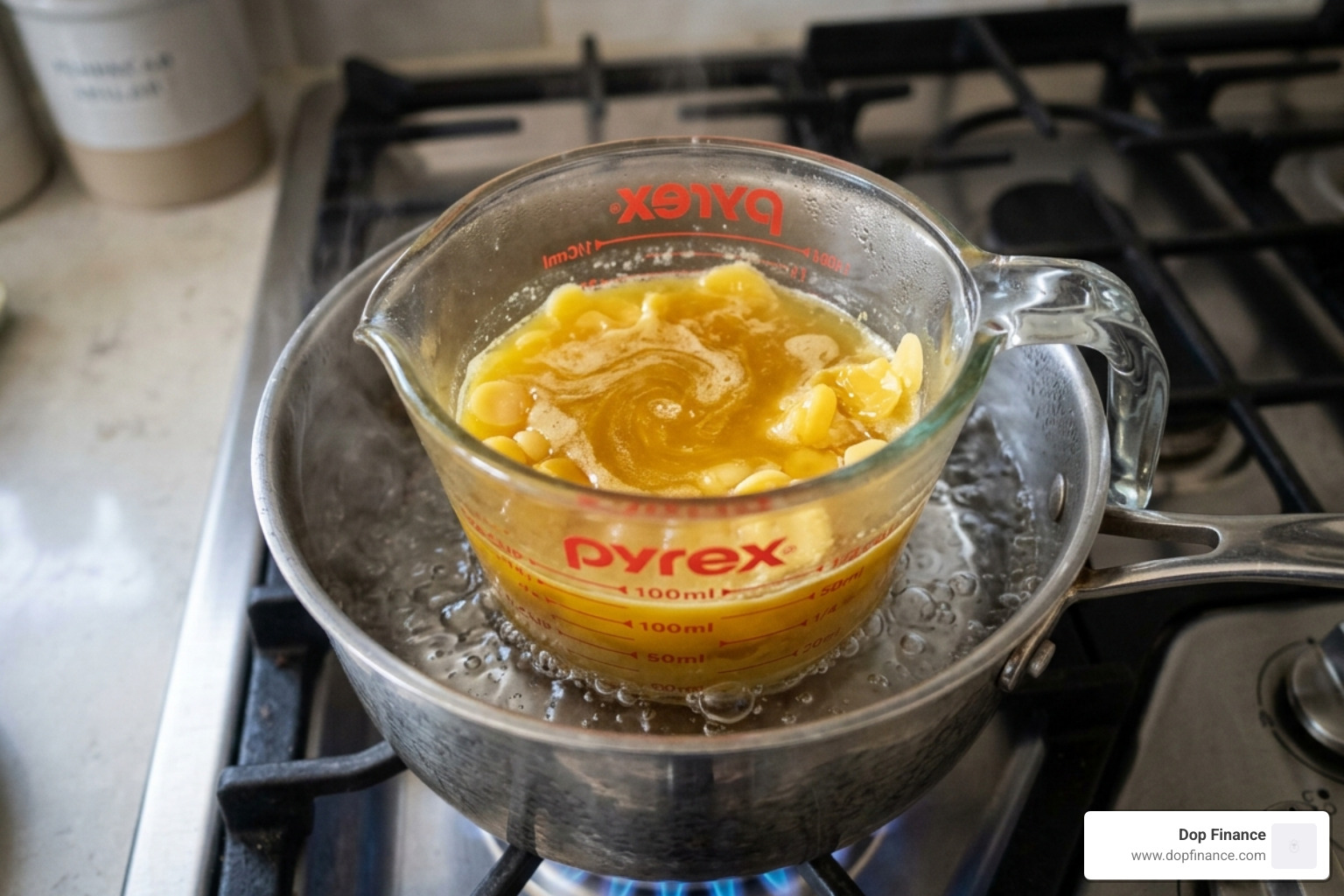
Fill the bottom of your double boiler with water and bring it to a gentle simmer. Add your beeswax pellets. As the wax begins to melt, you’ll notice that sweet, earthy aroma filling the room. According to the pros at How to Make Beeswax Candles, you want to reach a melting point of approximately 140-150°F.
Stir gently with a dedicated silicone spatula or a wooden chopstick. Once the wax is fully liquid, stir in your coconut oil until the mixture is clear and uniform.
3. The Pouring Phase
Temperature control is where many DIYers go wrong. If you pour wax while it’s too hot, it will shrink and crack. If it’s too cool, you’ll get unsightly ridges on the sides of the jar. The “sweet spot” for pouring beeswax is between 155-160°F.
Slowly pour the wax into your prepared jars, leaving about half an inch of headspace at the top. This prevents the flame from being too deep inside the jar, which can cause the glass to overheat.
4. The Cooling Process
Place your candles on a flat surface away from drafts. Beeswax is sensitive to temperature changes. If your kitchen is particularly chilly, you can preheat your oven to its lowest setting, turn it off, and place the candles inside to cool slowly. This prevents the wax from pulling away from the wick and creating “sinkholes.”
Adding Scents and Essential Oils
If you want to move beyond the natural honey scent, essential oils are your best friend. However, beeswax is picky about fragrance.
- Fragrance Load: Aim for 1 to 2 ounces of essential oil per pound of beeswax.
- The 160°F Rule: Add your oils when the wax is right around 160°F. If the wax is too hot, the oils will evaporate (flash off). If it’s too cool, they won’t bind properly.
- Scent Selection: Citrus oils (lemon, orange) are bright but tend to fade quickly. Forest scents (pine, cedarwood, fir) or strong herbs (peppermint, rosemary) tend to hold up better against the strong natural scent of the beeswax.
Mastering the Rolled Beeswax Candle Making Tutorial
If the idea of melting wax feels a bit daunting, the rolled method is a fantastic, no-heat alternative. This is a perfect project for kids or for a quick 1-2 minute DIY session.
You’ll need beeswax sheets, which are thin sheets of wax embossed with a honeycomb pattern.
- Ensure the sheets are at room temperature (if they are too cold, they will crack).
- Lay a wick along the edge of the sheet, leaving about 3/4 of an inch sticking out the top.
- Fold the edge of the wax tightly over the wick and start rolling.
- The key is to roll tightly and evenly. Any air gaps inside the candle will cause it to burn too fast.
- Once you reach the end, simply press the seam into the side of the candle to seal it.
Troubleshooting and Pro Tips for Perfect Results
Even the experts at Dop Finance run into the occasional “candle fail.” Here is how to fix the most common issues in your beeswax candle making tutorial.
Sinkholes and Cracks
If you notice a deep hole forming around the wick after the candle sets, don’t panic. This is caused by the wax shrinking as it cools. The “toothpick technique” works wonders here: while the candle is still slightly soft, poke a few holes around the wick to release trapped air. Then, save a little bit of leftover wax, remelt it, and do a “top-off” pour to fill the holes and smooth the surface.
Tunneling
Tunneling happens when the wick is too small for the container. The flame burns straight down the center, leaving a thick ring of unburned wax on the sides. To prevent this, follow the 1/8 inch rule: use a wick that is roughly 1/8 inch in diameter for every inch of the jar’s width. For example, a 3-inch wide jar needs a substantial wick to create a “melt pool” that reaches the edges.
The 1/4 Inch Rule
Always trim your wick to 1/4 inch before every single burn. A long wick creates a large, flickering flame that produces soot and causes the wax to burn too quickly. A trimmed wick ensures a steady, clean, and long-lasting glow.
Blooming
Over time, pure beeswax may develop a white, powdery film called “bloom.” Don’t worry—this isn’t mold! It’s actually a sign of high-quality, pure wax. It’s caused by the natural oils in the wax rising to the surface. You can easily wipe it off with a soft cloth or a quick blast from a hair dryer.
Cleaning Up Beeswax Residue
Cleaning up beeswax is the part of the tutorial everyone skips—until they have a ruined pot. Because beeswax has such a high melting point, it doesn’t just wash away with soap and water.
- The Oven Method: Place your waxy tools or jars on a baking sheet lined with parchment paper. Put them in the oven at 200°F for a few minutes. Once the wax melts, wipe it away quickly with a paper towel.
- The Freezer Trick: If you have a small amount of wax in a jar, pop it in the freezer for an hour. The wax will shrink and become brittle, allowing you to pop it out with a butter knife.
- Dedicated Tools: We can’t stress this enough. Buy a cheap glass measuring cup and a silicone spatula specifically for your candle making. It will save you a world of frustration in the kitchen.
Frequently Asked Questions about Beeswax Candles
How long do beeswax candles need to cure?
Technically, beeswax candles can be burned as soon as they are completely cool (usually 2-3 hours). However, for the best scent throw and a harder, longer-lasting burn, we recommend letting them cure for 24 to 48 hours. This allows the crystalline structure of the wax to fully stabilize.
Do beeswax candles really purify the air?
Yes! As mentioned earlier, the negative ions released by burning beeswax neutralize positively charged pollutants like dust and odors. While it won’t replace a high-end HEPA filter, it is the only type of candle that actively improves indoor air quality rather than degrading it.
How do I choose the right wick size for my jar?
Wick sizing is the trickiest part of the beeswax candle making tutorial. As a general rule:
- Small Jars (under 2 inches): Small square braid wick.
- Medium Jars (2-3 inches): #2 or #4 square braid wick.
- Large Jars (over 3 inches): You may need to “double wick” (place two wicks side-by-side) to ensure the wax melts all the way to the edges.
Conclusion
At Dop Finance, we believe that making smarter money moves includes investing in high-quality, sustainable goods for your home. Buying luxury beeswax candles can be expensive, but by following this beeswax candle making tutorial, you can create the same premium experience for a fraction of the cost.
Handmade beeswax candles make incredible gifts, provide a non-toxic environment for your family, and offer a meditative DIY process that grounds you in the present moment. Whether you’re pouring your first mason jar or rolling a set of colorful tapers for a dinner party, you’re now equipped with the expert knowledge to master this ancient craft.
Ready to dive deeper into home fragrance and smart DIY investments? Learn more about smart home fragrance moves and join our community of natural living enthusiasts today. Happy crafting!
