
The Great Escape: Easy Tips for Effortless Candle Mold Release
Why Candle Makers Struggle With Stuck Molds (And How to Fix It Fast)
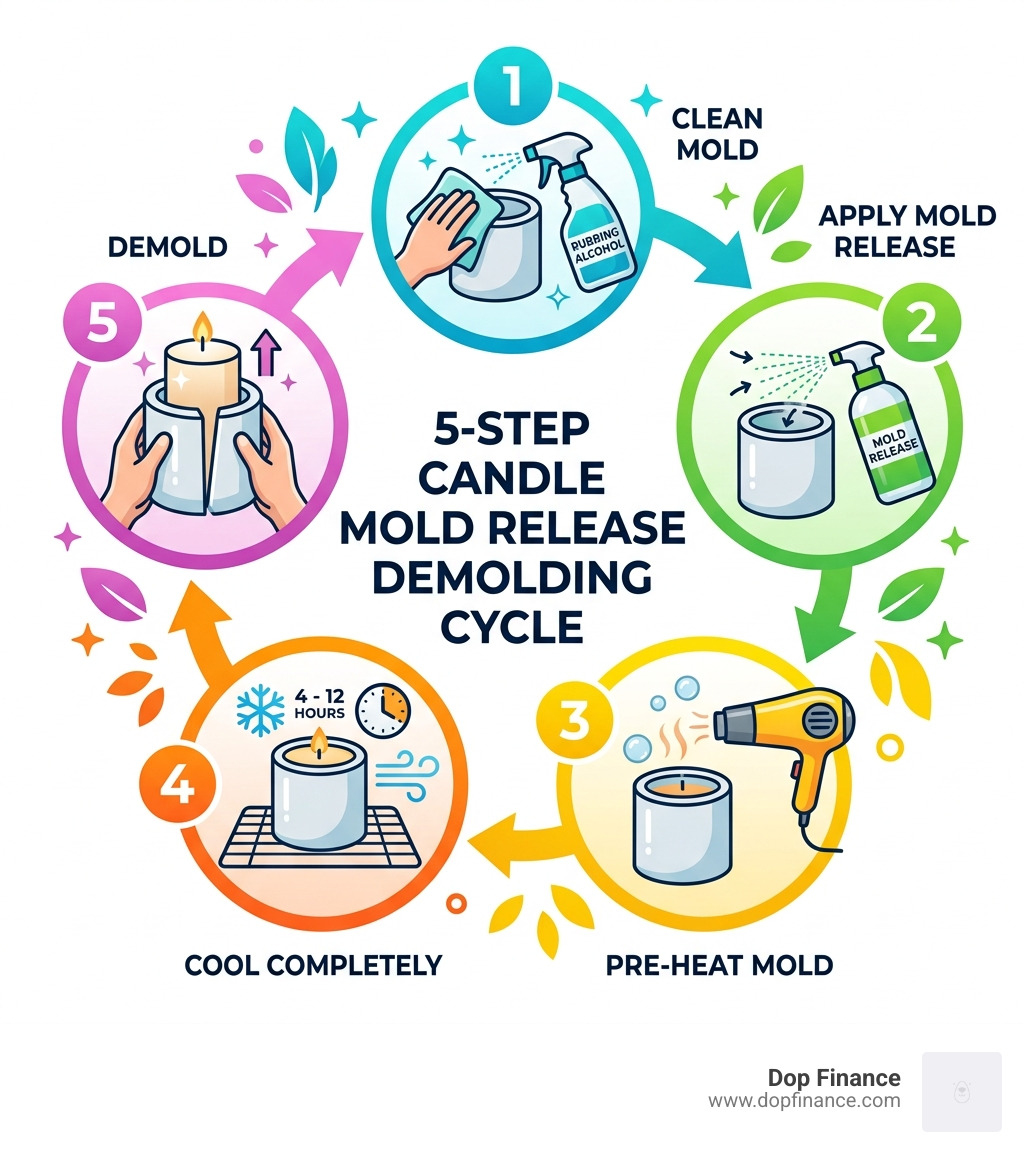
The most effective candle mold release tricks come down to five core steps:
- Clean your mold with rubbing alcohol before every pour
- Apply a thin, even coat of mold release spray or oil
- Pre-heat the mold with a heat gun to prevent air bubbles
- Cool completely — 4 to 12 hours depending on your wax type
- Demold using the freezer method or gentle heat if the candle sticks
That’s the short version. Keep reading for the full breakdown.
There’s nothing more frustrating than spending time on a beautiful candle, only to have it refuse to leave the mold. You tug, you twist, you panic — and sometimes the candle cracks anyway.
This is one of the most common problems home candle makers face, especially beginners. The good news? It’s almost always preventable.
Most sticking problems come down to three things: the wrong wax, a poorly prepared mold, or skipping the release agent. Get those three right, and demolding becomes almost effortless.
In this guide, you’ll learn exactly how to prevent candles from getting stuck, which release agents actually work, how to rescue a stuck candle without damaging it, and how to choose the right wax for clean, professional results every time.
Why Mold Release is the Secret to Professional Candles
At Dop Finance, we believe that making smart moves with your money includes protecting the investments you make in your hobbies. When you buy high-quality molds, you want them to last. That is where mold release agents come into play.
A mold release agent is essentially a barrier between the wax and the surface of the mold. Think of it like greasing a cake pan; without that micro-thin layer, the wax bonds to the pores of the mold material, creating friction that makes removal a nightmare. By reducing surface tension, these agents allow the candle to slide out with zero resistance.
Using these candle mold release tricks isn’t just about convenience; it’s about professional aesthetics. Why I Swear by Candle Mold Release Spray: My Expert Tips for Perfect Candle Making highlights that a good spray prevents surface blemishes and “scuffing” that occurs when a candle is forced out of a dry mold. Furthermore, release agents act as a preservative for your equipment. Repeatedly tugging and scraping at a silicone mold can cause tiny tears or “pitting,” eventually ruining the mold. A quick spray ensures your molds remain in pristine condition for years to reach.
Essential Candle Mold Release Tricks for Every Maker
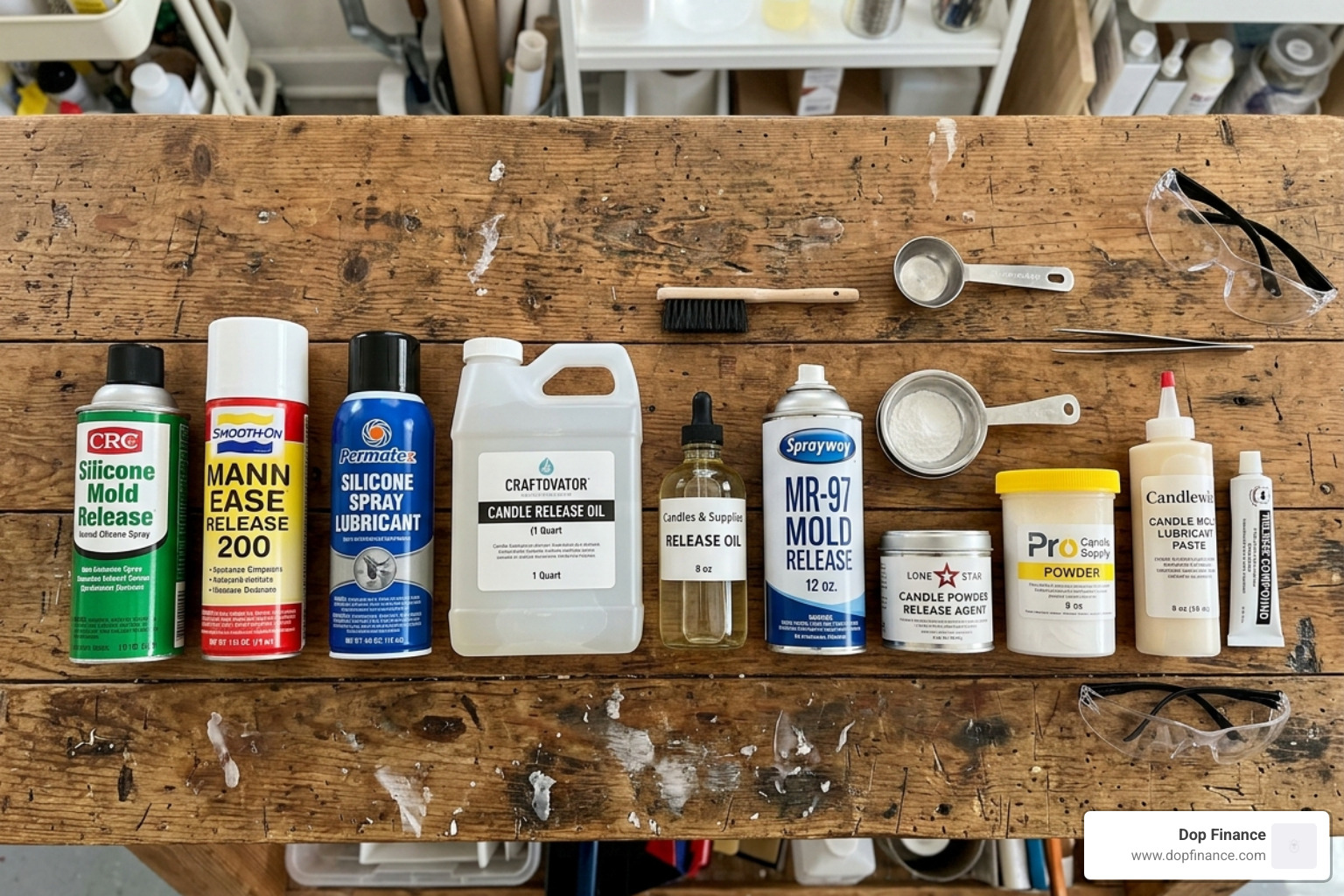
Whether you are using rigid acrylic or flexible silicone, the right lubricant is your best friend. In our experience, the “top trick” for any serious maker is a dedicated silicone-based release spray. These aerosols provide an incredibly fine, even mist that reaches into the deepest crevices of intricate designs.
The Power of Silicone and Powder
Silicone sprays are the gold standard because they are non-reactive and withstand high temperatures—some up to 572°F! If you prefer a dry method, mold release powder is an excellent alternative. Typically, you add about one teaspoon of powder per 5-6 pounds of wax. It alters the wax’s internal structure to encourage shrinkage, making the candle naturally pull away from the walls.
The “Release Slit” Technique
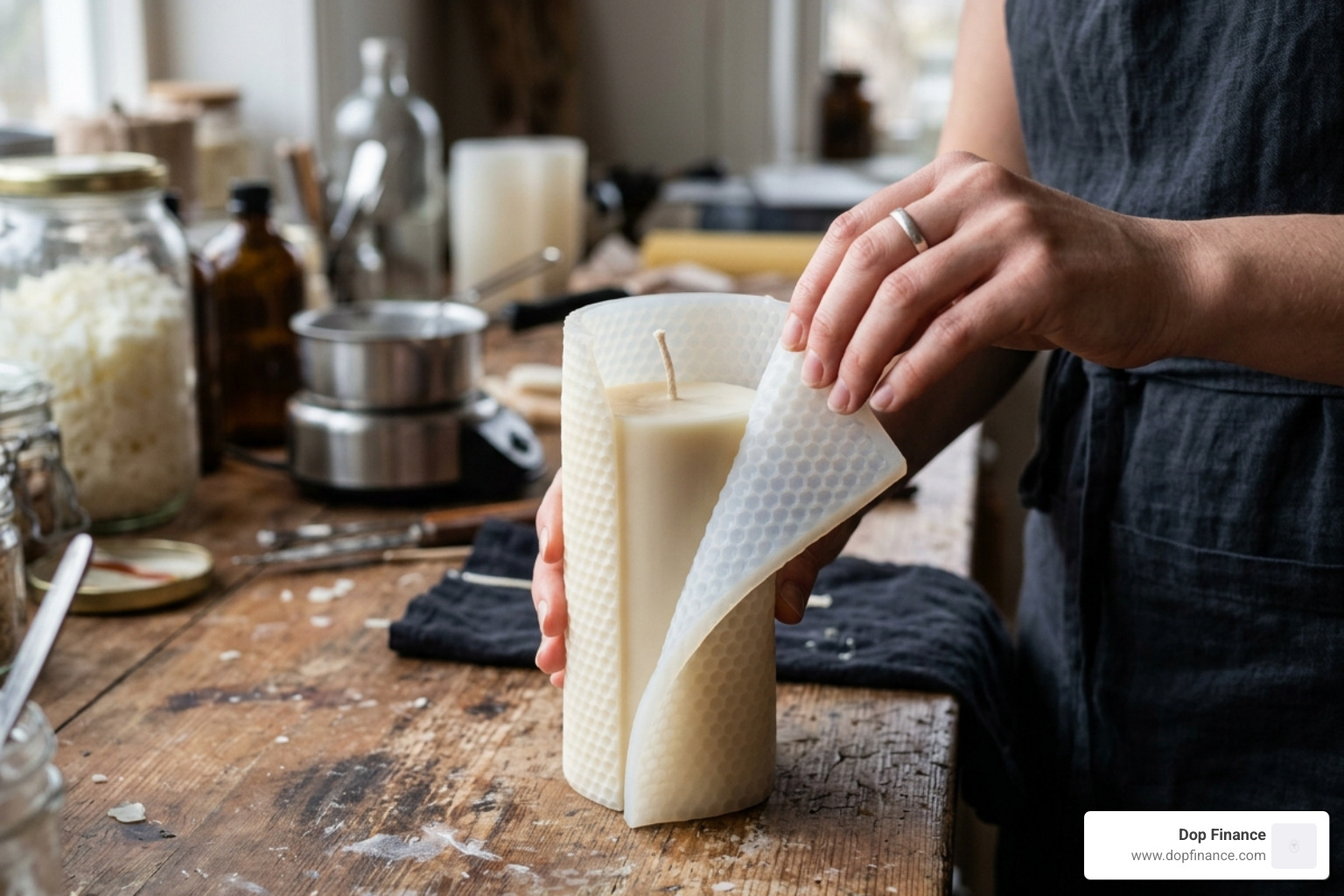
For those ultra-intricate 3D molds—think detailed flowers or statuettes—even a spray might not be enough. One of our favorite 6 Tips for Demolding Wax Projects – CandleScience is creating a “release slit.” Using a sharp craft knife, carefully cut a vertical slit down one side of your silicone mold. Before pouring, secure the mold tightly with heavy-duty rubber bands and a piece of duct tape over the seam. Once the wax is hard, you simply peel the mold open like a jacket. It’s a game-changer for fragile designs.
Using Household Items as Candle Mold Release Tricks
If you’re in a pinch and don’t have professional spray on hand, your kitchen pantry is a treasure trove of alternatives.
- Cooking Spray: Generic vegetable oil sprays (like Pam) work surprisingly well for basic shapes. Just be sure to wipe away any excess so it doesn’t pool at the bottom.
- Mineral Oil or Baby Oil: Applying a light coating with a paper towel creates a reliable barrier.
- Petroleum Jelly: This is excellent for the “joints” of two-part plastic molds to prevent leaking while also aiding release.
- Crisco: Adding about 2 tablespoons of Crisco to 8 lbs of paraffin wax is an old-school trick to make the wax “greasier,” which is especially helpful for unscented candles that tend to stick more than scented ones.
- Dish Soap: For latex or rubber molds, a tiny bit of liquid dish soap rubbed inside can act as a lubricant that washes right off the finished candle.
Step-by-Step: Preparing Your Molds for a Flawless Pour
Preparation is 90% of the battle. Follow this workflow to ensure you never have to wrestle with a mold again.
- The Alcohol Wipe: Even if your mold looks clean, it might have dust or microscopic wax residue. Wipe the interior with 91% rubbing alcohol. This ensures your release agent sticks to the mold, not the debris.
- The Lubricant Layer: Apply your chosen agent. If using a spray, hold the can 6-10 inches away and use short bursts. If using oil, wipe it on and then use a clean cloth to buff out any “beads” of oil. You want a film, not a puddle.
- Pre-Heating: This is a “pro secret” we swear by. Use a heat gun or a low oven to warm your molds before pouring. This prevents the wax from “shocking” when it hits a cold surface, which reduces air bubbles and ensures the wax settles perfectly against the release agent.
- Wicking and Sealing: Thread your wick and use a dedicated wick sealant or “white tac” at the bottom hole. This prevents your lubricant and wax from leaking out during the pour.
Cooling Times: The Patience Factor
One of the biggest mistakes is trying to demold too early. Wax needs time to undergo “thermal contraction”—the process where it shrinks as it cools.
| Wax Type | Silicone Mold Cooling | Rigid (Metal/PVC) Cooling |
|---|---|---|
| Paraffin | 4 – 6 Hours | 6 – 8 Hours |
| Soy Blend | 6 – 8 Hours | 8 – 10 Hours |
| Beeswax | 8 – 10 Hours | 10 – 12 Hours |
| Palm Wax | 5 – 7 Hours | 8 – 10 Hours |
Note: For the best results in April 2026, we recommend letting all pillar candles sit for a full 24 hours before attempting demolding.
The Science of Wax: Choosing the Right Blend for Easy Release
Not all waxes are created equal when it comes to molds. If you are using a soft container wax (like 100% soy) in a pillar mold, you are going to have a bad time. Soft waxes are designed to adhere to glass, which is the exact opposite of what you want for a mold.
Pillar Blends are specifically formulated to shrink. Paraffin is the king of release because it has a high contraction rate. As it cools, it physically pulls away from the walls of the mold, often leaving a small gap that makes the candle fall right out.
Enhancing Wax Performance with Candle Mold Release Tricks
If you insist on using softer waxes or are struggling with a “sticky” batch, additives are your secret weapon:
- Stearic Acid: Adding 10% stearic acid to paraffin wax increases opacity and, more importantly, increases shrinkage.
- Vybar 103: This is great for binding fragrance oil, but it also helps toughen the wax, making it less likely to crumble during demolding.
- Fragrance Oil (FO): Interestingly, scented candles often release easier than unscented ones because the fragrance oil acts as an internal lubricant. If making unscented candles, you may need to be extra diligent with your mold spray.
Troubleshooting: How to Rescue a Stuck Candle
Even with the best candle mold release tricks, accidents happen. If your candle is stuck, don’t reach for a screwdriver! You’ll only ruin the mold and the candle. Instead, try these rescue missions.
The Freezer Method
This is the most effective fix. Place the stuck mold in the freezer for about 15 to 30 minutes. The extreme cold causes the wax to shrink even further, often creating that “pop” sound of release. Warning: Do not leave it in for more than 30 minutes, or the wax may become too brittle and crack.
The Heat Gun/Blow Dryer Technique
If the freezer doesn’t work, try the opposite. Use a heat gun on a low setting to gently warm the outside of the mold. This melts a microscopic layer of the candle’s surface, acting as a lubricant to let it slide out. This is particularly effective for metal and sturdy plastic molds.
The Water Bath
For metal molds, running hot (not boiling) water over the exterior can loosen the bond quickly. If the candle is truly a lost cause, you can submerge the whole mold in boiling water to melt the wax out entirely, saving the mold for your next attempt.
Frequently Asked Questions about Candle Making
What is the best candle mold release trick for beginners?
The single most important tip is to use a dedicated silicone mold release spray and a pillar-blend wax. Beginners often try to use soft soy wax without additives, which is the primary cause of sticking. Starting with a flexible silicone mold rather than a rigid acrylic one also makes the learning curve much friendlier.
How long should candles cool before demolding in 2026?
While modern wax blends are faster-setting than those of a decade ago, patience is still a virtue. For a standard 3-inch pillar, wait at least 8 to 12 hours. If you are working in a warm environment, extending that to 24 hours is the safest bet to ensure the core is completely solid.
Should I always use release spray for silicone molds?
Technically, high-quality silicone is “self-releasing.” However, we recommend using a light spray anyway. It extends the life of your molds by reducing the “tug” on the silicone and ensures that even the tiniest details (like the petals on a flower mold) come out crisp and unbroken.
Conclusion
Mastering the art of the “Great Escape” is what separates hobbyists from professional makers. By utilizing these candle mold release tricks—from the freezer method to the magic of silicone sprays—you eliminate the frustration of ruined projects and save money on replacement molds.
At Dop Finance, we want your home fragrance journey to be as seamless and profitable as possible. Whether you’re making candles for your own home or building a small business, these techniques ensure every pour is a success. Check out more candle making resources on our site to keep leveling up your DIY game!
